









On November 20, 2025, the China-U.S. Intellectual Property Dialogue: The Global Governance of Intellectual Property was successfully held at the Chinese Embassy in Washington, D.C.
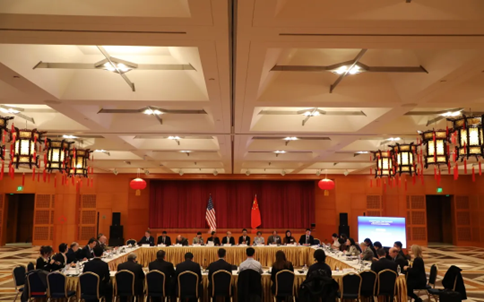
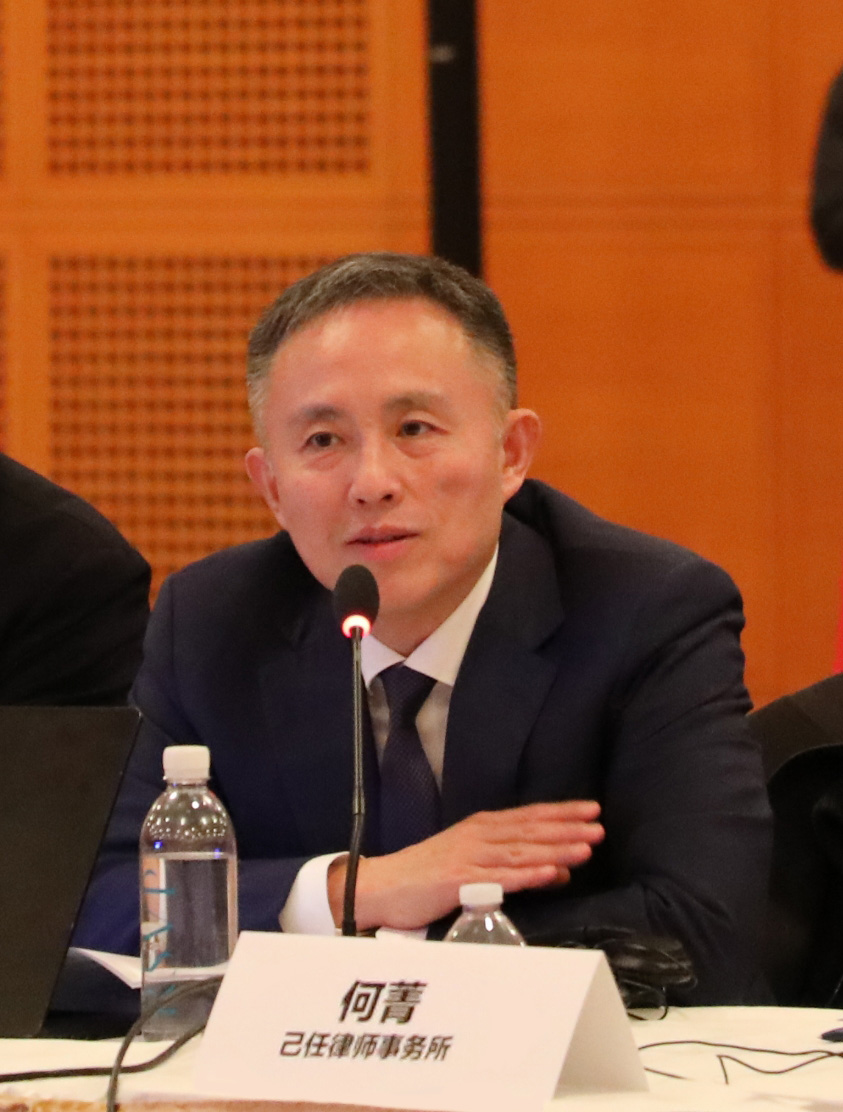
He Jing, Managing Partner of GEN Law Firm, was invited to attend and served as the moderator for the session on “Pathways for China-US Intellectual Property Cooperation,” engaging in in-depth exchanges with renowned experts, scholars, and industry representatives from both China and the U.S.
The Dialogue was hosted by the Chinese Embassy in the U.S., co-organized by the Renmin University of China Law School, Civil, and Commercial and Economic Law School of China University of Political Science and Law, and Penn State Dickinson Law School, and supported by the Intellectual Property Law Association of China Law Society and the Sunshine IP Law and Development Foundation. Representatives from academia, the legal sector, and the business community from both countries were invited to discuss five cutting-edge global IP governance topics: Pharmaceutical Intellectual Property Protection, Legal Protection of Big Data and Trade Secrets, Standard Essential Patent-Related Issues, Copyright Law for AI-Generated Works, and Pathways for China-US Intellectual Property Cooperation.
Charge d’Affaires ad interim of the Chinese Embassy, Qiu Wenxing, delivered the opening remarks, emphasizing China’s strong commitment to IP development and protection, supporting the use of IP as a new highlight in China-U.S. cooperation, and welcoming U.S. experts and scholars to engage in active exchanges in China to contribute to the stable, healthy, and sustainable development of China-U.S. relations. Shen Xuesong, Minister Counselor for education affairs, also attended.
During the “Pathways for China-US Intellectual Property Cooperation” session, He Jing moderated discussions on topics including the pathways for Chinese companies’ IP cooperation in the U.S. and challenges faced by Chinese companies in U.S. IP litigation. He actively engaged with speakers and panelists from both countries, addressing key questions and raising follow-up points. Participants observed that over the past five years, Chinese companies have increasingly relied on the U.S. legal system to protect their rights, emphasizing the strong link between U.S. IP law reforms and Chinese business interests, and highlighting the practical importance for Chinese scholars, companies, and practitioners to study the U.S. IP system.
The D ialogue upheld its tradition of open and in-depth discussions, addressing a wide range of cutting-edge IP topics beyond trademarks, including issues of global significance. At the conclusion, scholars from both countries expressed strong enthusiasm for advancing China-U.S. IP cooperation and agreed that future exchanges should be expanded across multiple formats. The Chinese side also extended an invitation to U.S. representatives to join the next phase of discussions in China.